

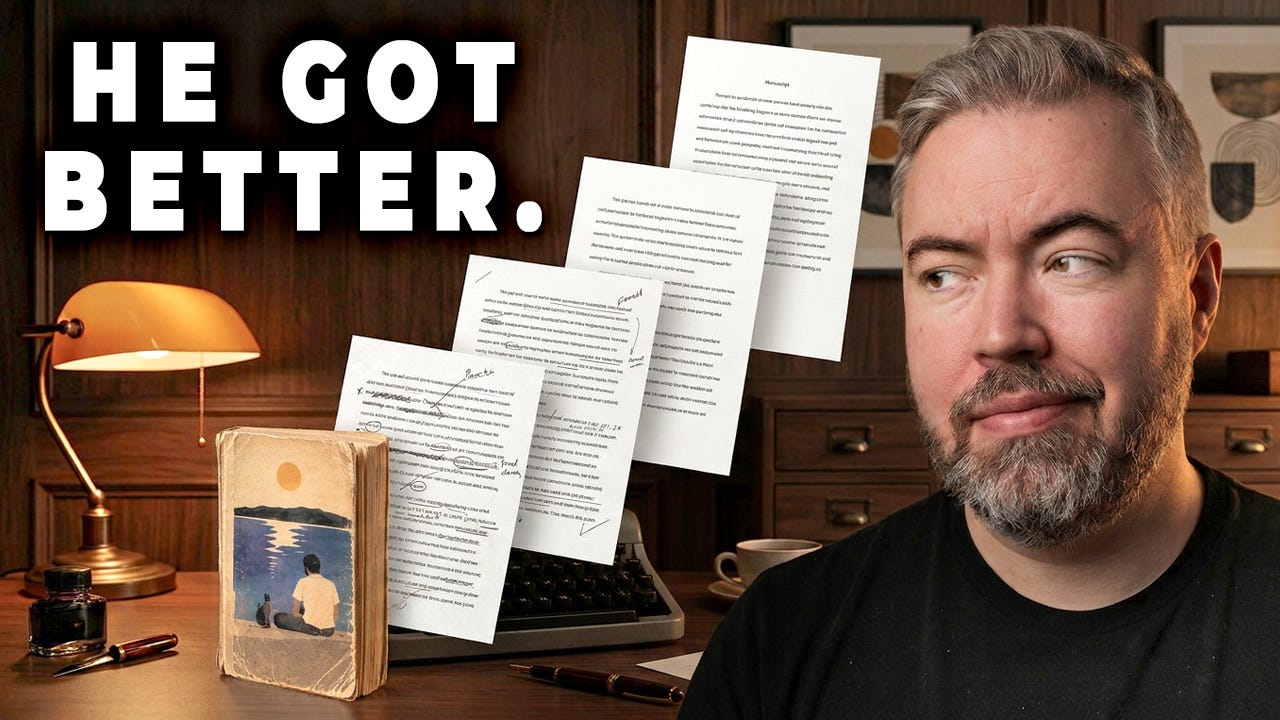
Haruki Murakami’s first novel isn’t that great, but that is actually a good thing.
I say that because it shows how far one can develop as a writer. In Murakami’s case from the ‘flimsy’ and disjointed debut Hear the Wind Sing, to masterpieces like The Wind-Up Bird Chronicle.
In this new video I look at how Murakami and other writers have radically changed or improved their writing style after a couple of early attempts.
I also discuss the flaws in Hear the Wind Sing, the Murakami tropes already present in nascent form, and whether a novel like this debut novella could be published today.
Check it out below.
Thanks,
Nick
With any artist whose work becomes significant and/or popular, it's always interesting to look at their early works, especially if you're coming to them later on, rather than encountering them organically in sequence at the time, as it were.
I recently re-read The Rachel Papers, and I was very happy to find it's still just as enjoyable as when I first read it, probably circa 1993 or so. I think it was the second or third Amis novel I read, and I'd still put it high in his top five. One of his very funniest too. It doesn't have the heavyweight status of, say, Money, London Fields, or Time's Arrow, and I quite like that. You could say it's sort of a picaresque coming of age novel, with echoes as far back as Henry Fielding, as well as Amis senior's Lucky Jim.
It's interesting to do it in music too. The Beatles had the magic from day one, even though they didn't get properly great until quite a few albums in, but you can hear the brilliance in the early singles. The Stones' debut album though is really just the work of a very adept and devoted covers band. There's not much there to indicate they'd be capable - within only a few years, really - of masterpieces like Let It Bleed, Sticky Fingers, and Exile. Compare that to Hendrix, who arrived fully-formed and mercurial with the fantastic Are You Experienced?